Determining flow pulsations from liquid pumps
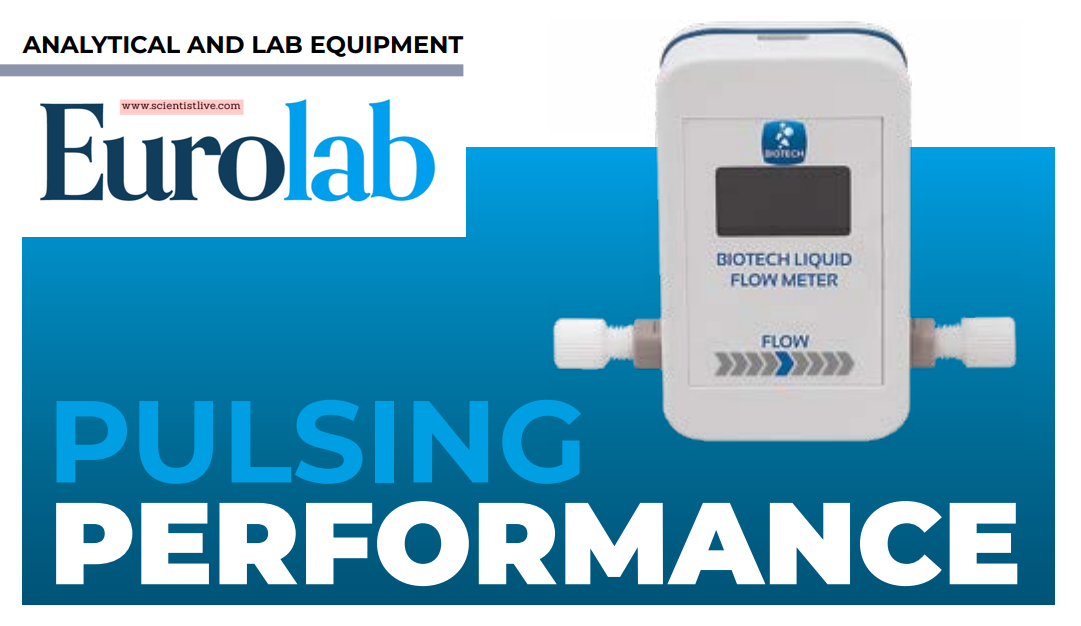
In its April 2026 issue, the free laboratory magazine EuroLab reported about how a high-resolution liquid flow meter was used to avoid problematic pulsation from peristaltic pumps. This study, featured in the magazine’s section for analytical & lab equipment, was performed by Dr. Neelam Akram and Dr. Tobias Jonsson at Diduco, in collaboration with Anders Grahn at Biotech Fluidics.
Comparing liquid flow pulsation patters
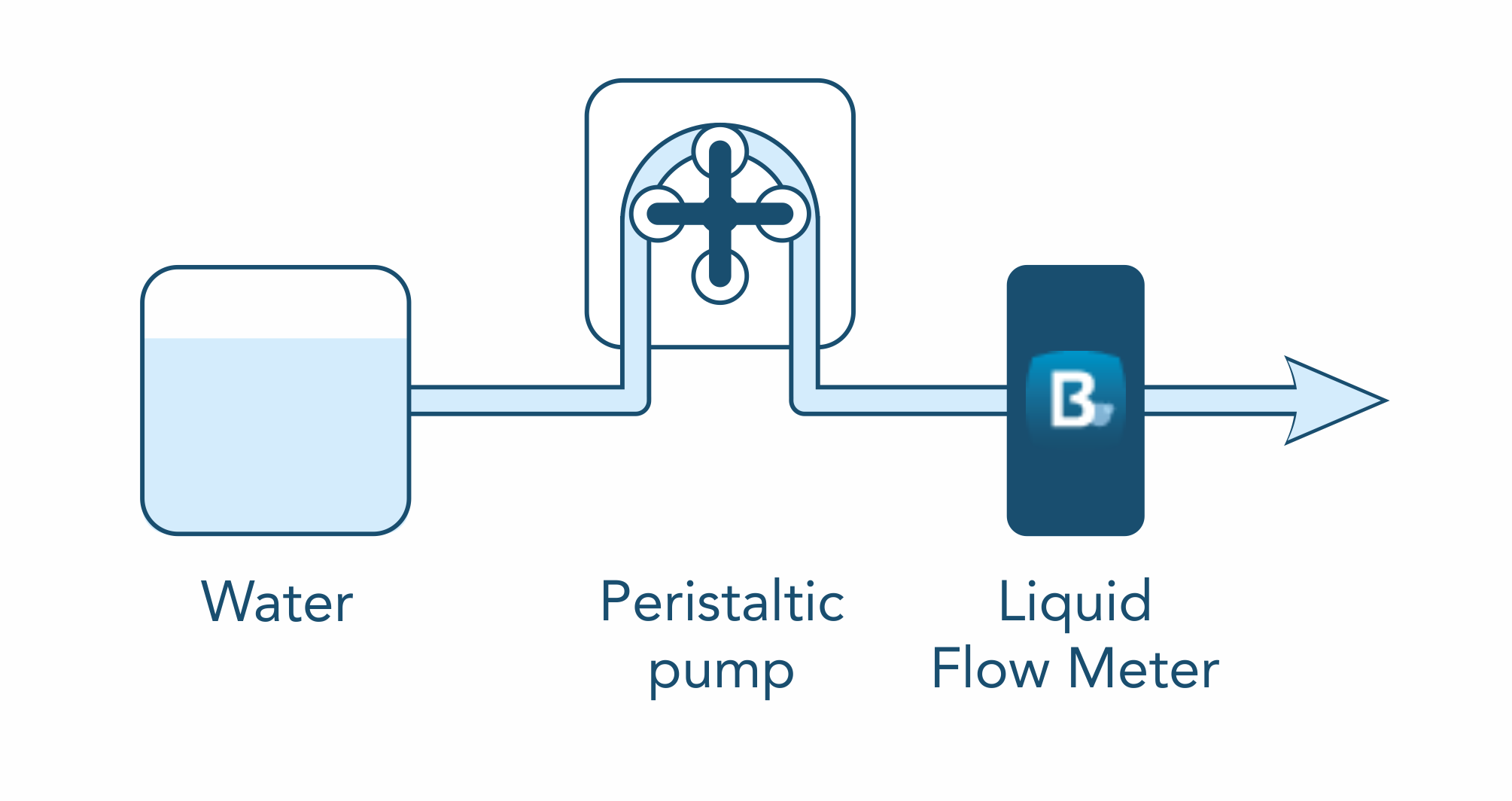
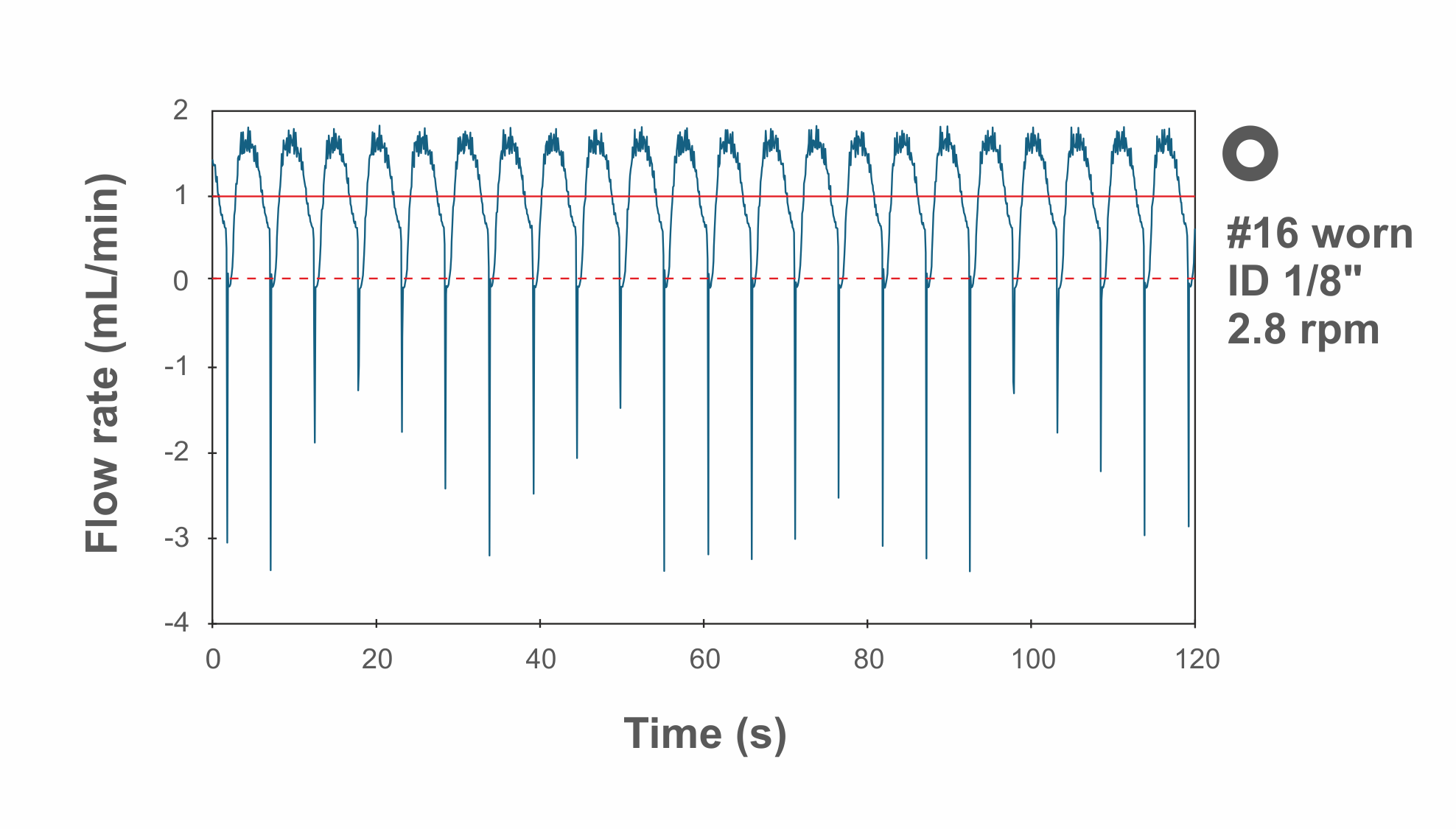
The article describes how high-resolution data from the Biotech Liquid Flow Meter was used to document repetitive patterns of flow rate variations from peristaltic pumps. The recorded pulsation patterns were affected by several parameters specific to the pump construction, but they also changed when varying pump tubing inner diameter and rotational speed to accomplish the targeted volumetric flow rate.
Pulsations are influenced by parameters such as the size and number of rollers squeezing the tubing, plus the diameter of the rotor. Such factors are set by the pump construction and thus differ between brands and models.
Importance of selecting the right pump tubing
The study showed that momentary reversed flow was a significant characteristic of the pulsation patterns and that unfortunate combinations of tubing diameter and rotational speed could increase the amplitude of the flow variations. It was also documented that the negative flow amplitudes got worse as the pump tubing was more worn.
Reducing pulsations to improve chemical analysis
Armed with information about pulsation performance at various setups, the peristaltic pump was used to continuously supply dilute acid to a chemically regenerated membrane suppressor employed in ion chromatography analysis of seven common inorganic anions. Here it was concluded that operational pump conditions with stronger pulsation patterns led to more background noise and worse signal-to-noise ratio in the ion chromatographic analysis.
It was found that the noise during these analyses could be reduced to 1-2 nS/cm when the peristaltic pump parameters were selected to minimise flow pulsations, whereas it generally was twice that or more at other conditions
More information
The full issue of the EuroLab magazine can be retrieved from its online archive at www.scientistlive.com, and the article can also be downloaded separately below. Learn more about the Biotech Liquid Flow Meter at its linked product pages. You are also most welcome to contact Biotech Fluidics to discuss how liquid flow rate measurements or other inline monitoring devices can help you to optimise and control your precision fluidic system.