
News & Insights about
Collaborations
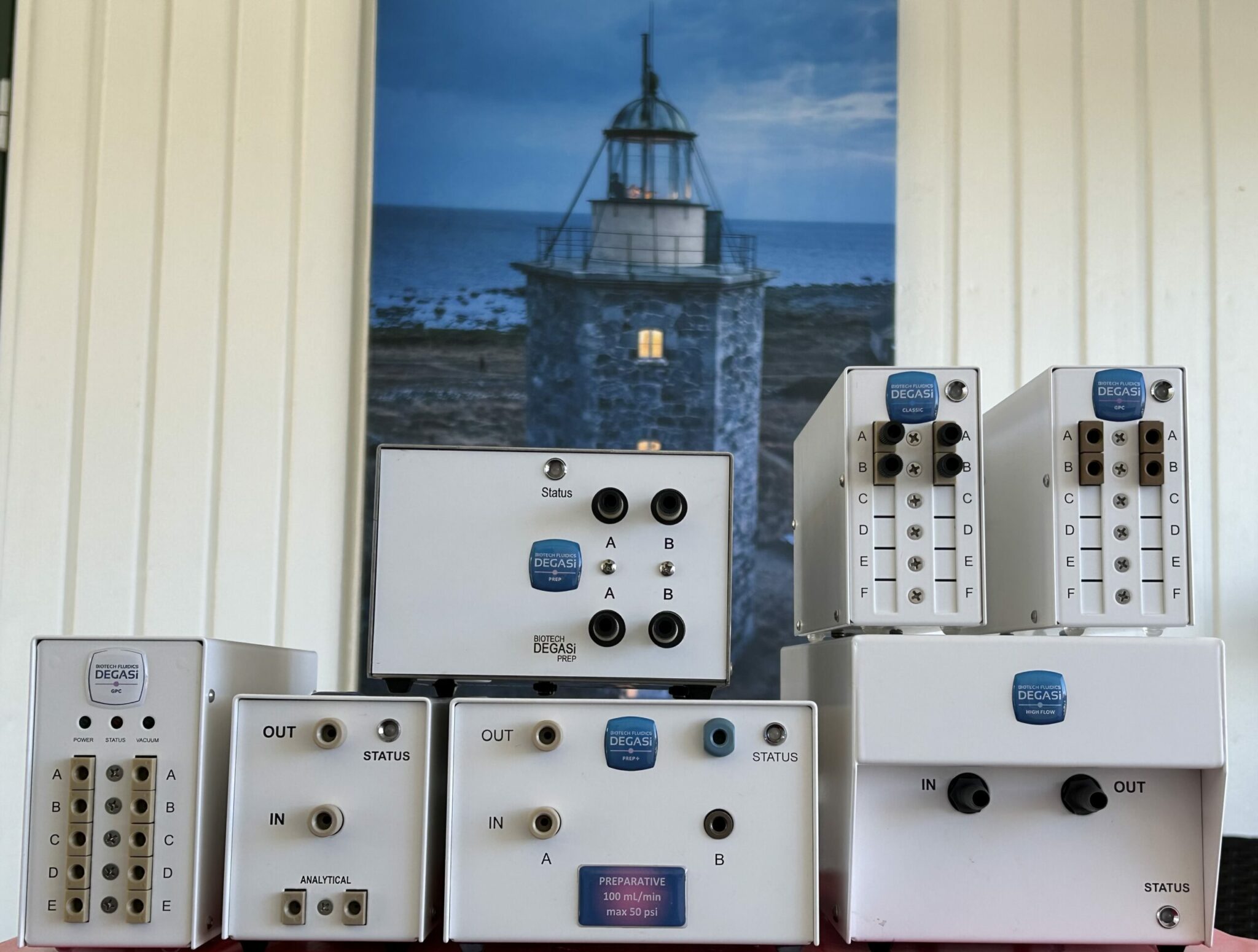
DEGASi® inline degassers made in USA
Biotech Fluidics LLC in Minneapolis manufactures all models in the DEGASi® family of inline degassers for our US customers. This reduces cost burdens of freight and tariffs and strengthens customer service in this important market.
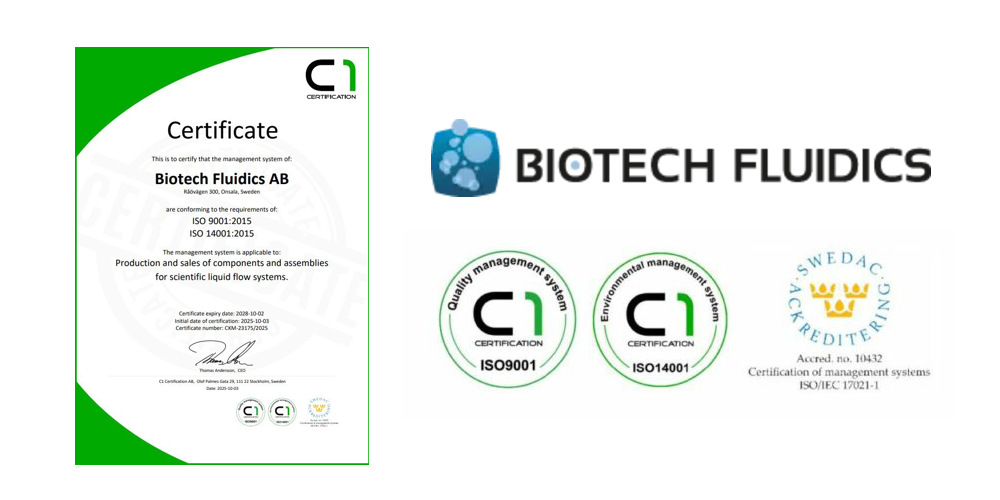
Biotech Fluidics certified according to ISO 9001 and 14001
Learn about what it means that Biotech Fluidics have been certified according to ISO 9001 and ISO 140001.
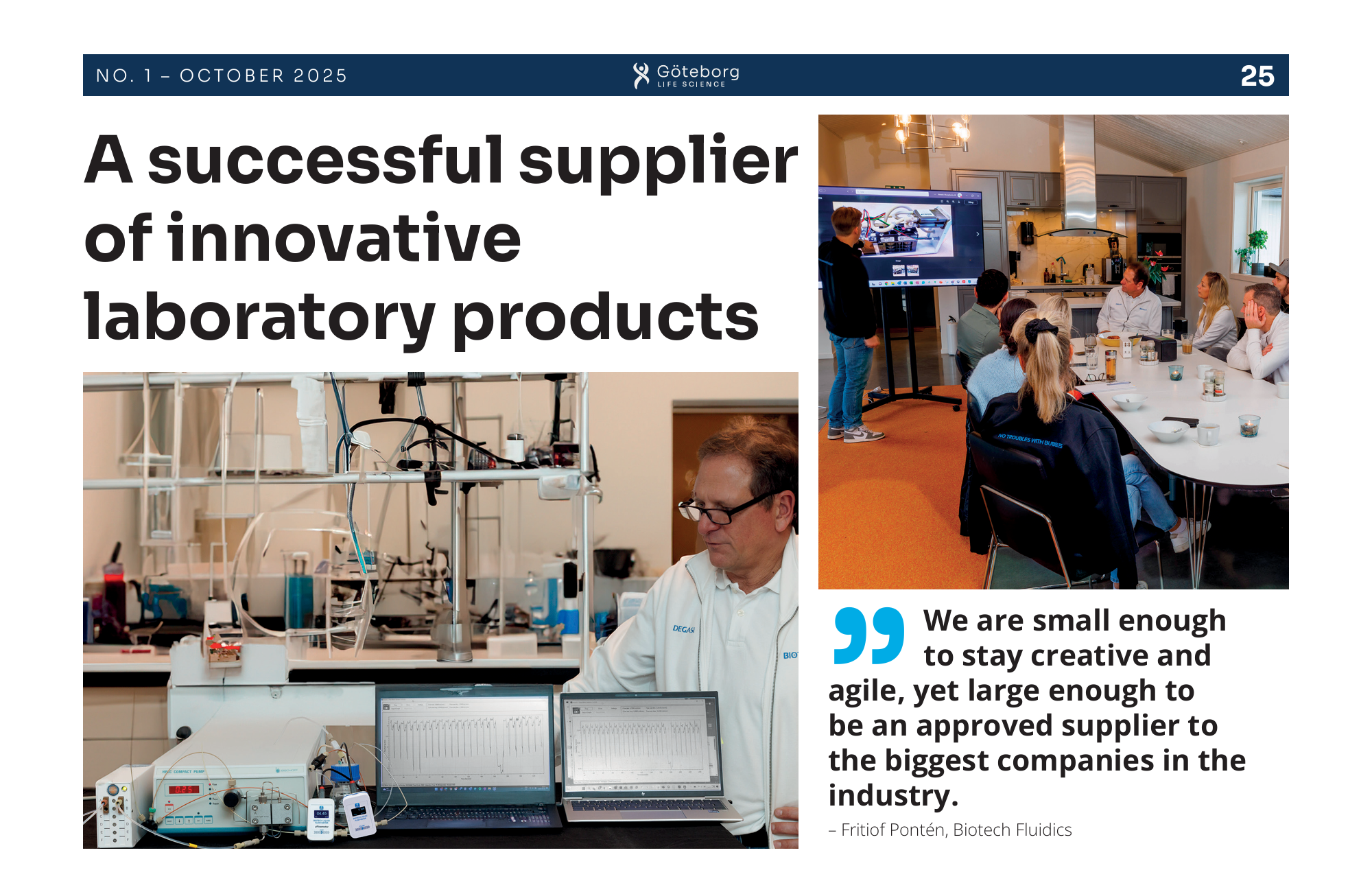
Biotech Fluidics featured in life science magazine
The magazine Life Science Göteborg interviewed our CEO Dr. Fritiof Pontén about the continued growth of Biotech Fluidics.
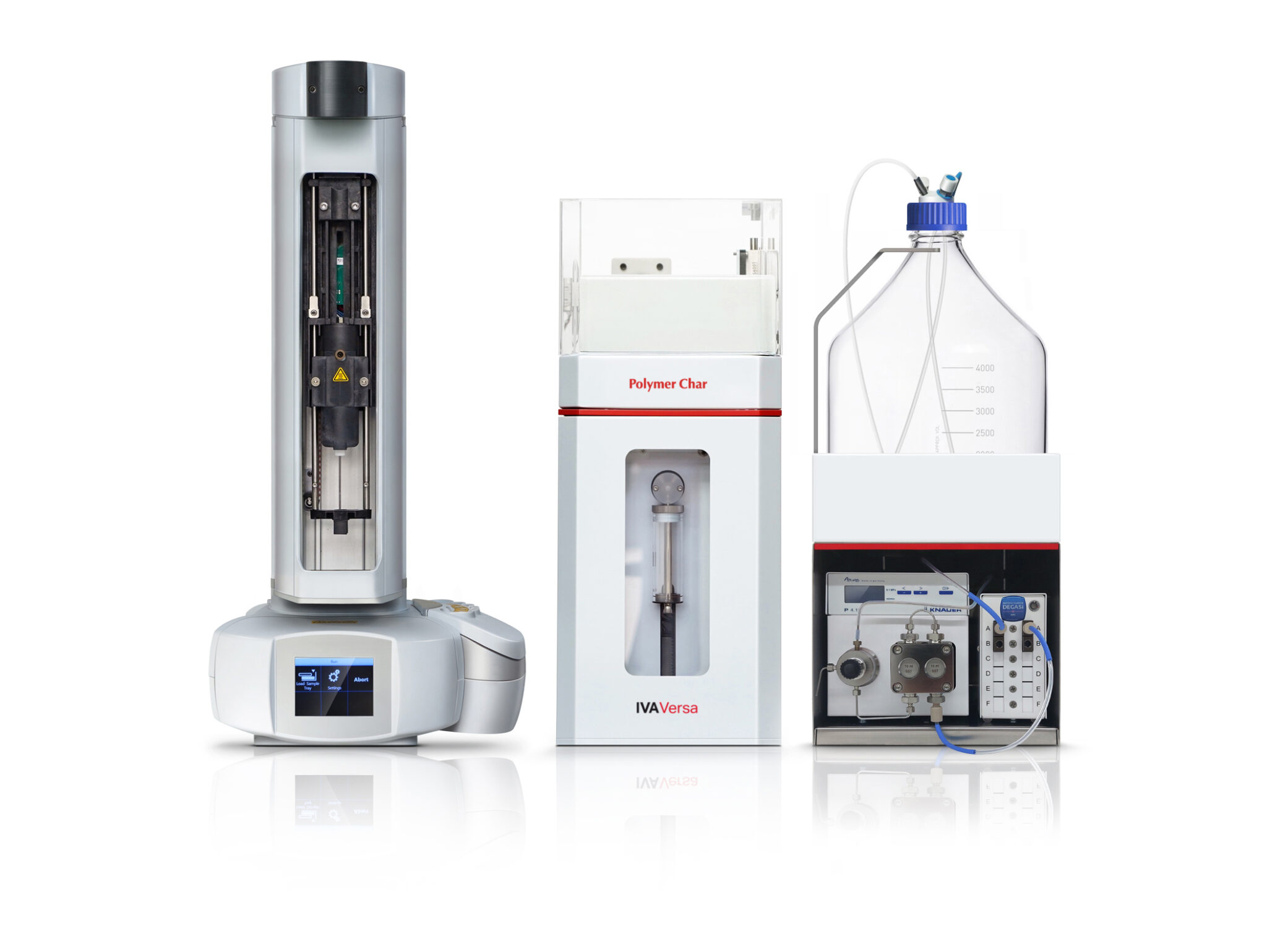
Biotech Fluidics develop degasser for Intrinsic Viscosity Analyzer
Biotech Fluidics has partnered with Polymer Char to integrate its DEGASi® degasser into their Intrinsic Viscosity instruments, ensuring precise and reliable measurements.

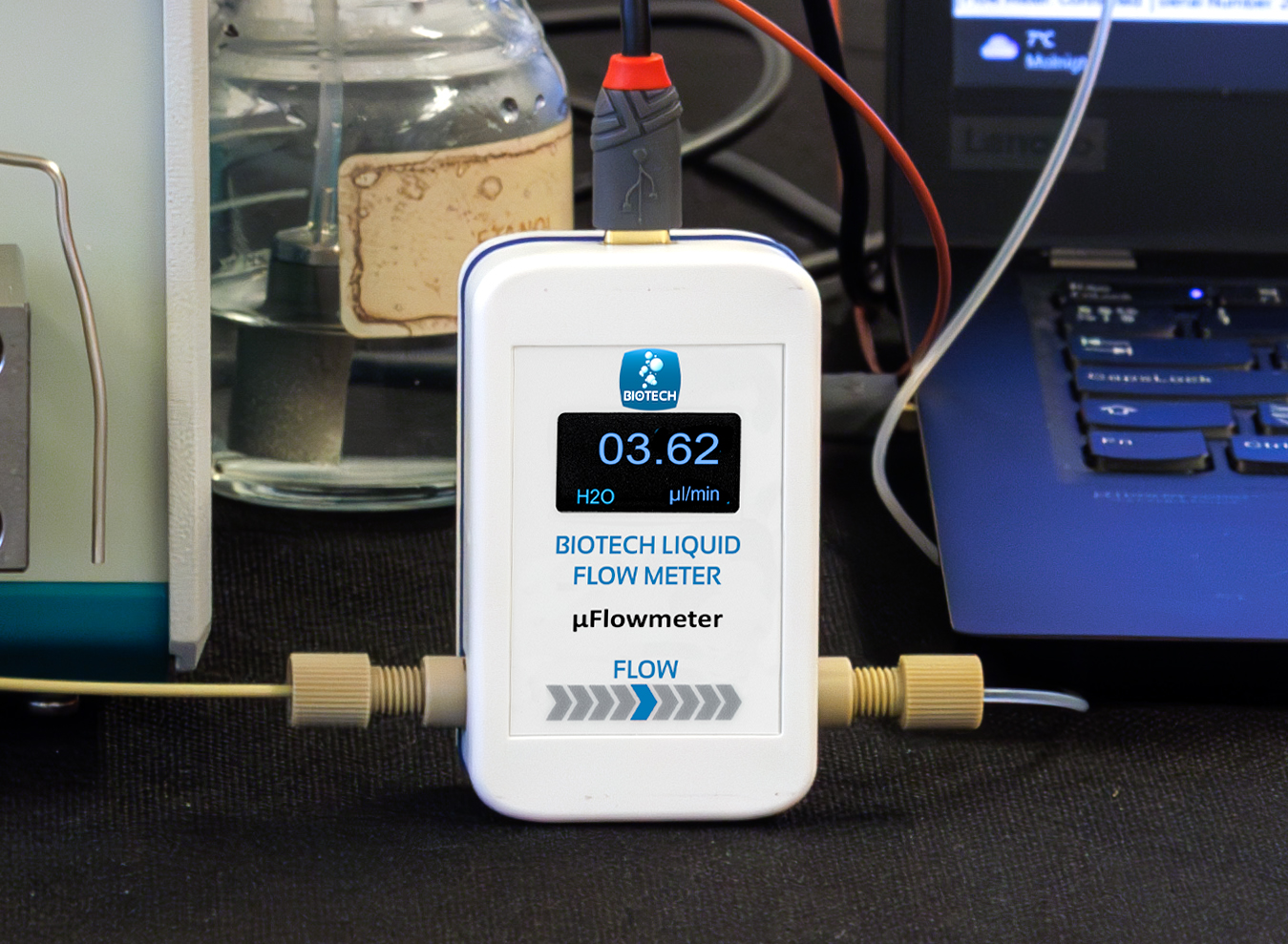
Validating the performance of LC capillary columns
Customer success story of how capillary column manufacturer use the Biotech Liquid Micro Flow Meter during column performance testing.
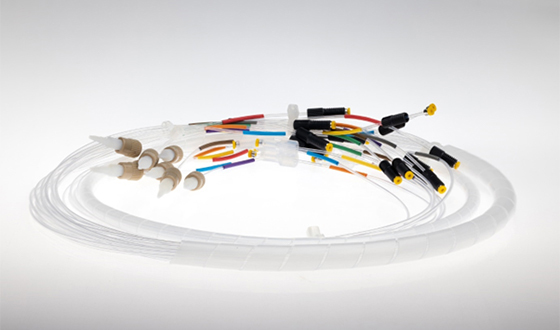
Tubing kits for dissolution testing
Biotech Fluidics manufactures custom tubing kits for dissolution testing equipment, simplifying the process of automated analysis.